
An Introduction to the Basics of Written Japanese

In this series, we provide information on fonts to help non-native Japanese speakers select and propose Japanese fonts when rolling out Japanese-language services.
This article will introduce the characters used in Japanese and the character sets of its fonts.
There are three types of characters in written Japanese: kanji, hiragana, and katakana. Japanese is unusual among writing systems of the world in that it involves the regular use of multiple types of characters. In this article, let’s get a deeper understanding of the main character types, the history of Japanese characters, how they’re currently used, and character sets of fonts, to aid in proposing Japanese fonts.
Table of Contents
1. An Introduction to Hiragana, Katakana, and Kanji
2. A Brief History of Written Japanese
3. An Explanation of Character Sets of Japanese Fonts
1. An Introduction to Hiragana, Katakana, and Kanji
Modern Japanese mainly combines three types of characters to compose sentences. Numbers, symbols, and Latin characters may also be used as needed, but this article will focus on the three main character types.
Kanji
Hiragana
Katakana

Of these three, hiragana and katakana are collectively known as “kana.”

A single kana is usually composed of a consonant and one of five vowel sounds. Since each has 46 characters, there are 92 kana in total.

In this example from a magazine, you can see how kanji, hiragana, and katakana are all used together.

2. A Brief History of Written Japanese
Next, let’s trace the history of the Japanese language. By going back in time, we can see how the three character types of kanji, hiragana, and katakana originated and took root in Japanese.
Kanji
Accounts differ, but kanji is commonly held to have been introduced to Japan from the Chinese mainland around the first century. Before that, the Japanese language is said to have had no writing system of its own.
Over time, unique alterations to kanji began to occur in Japan.
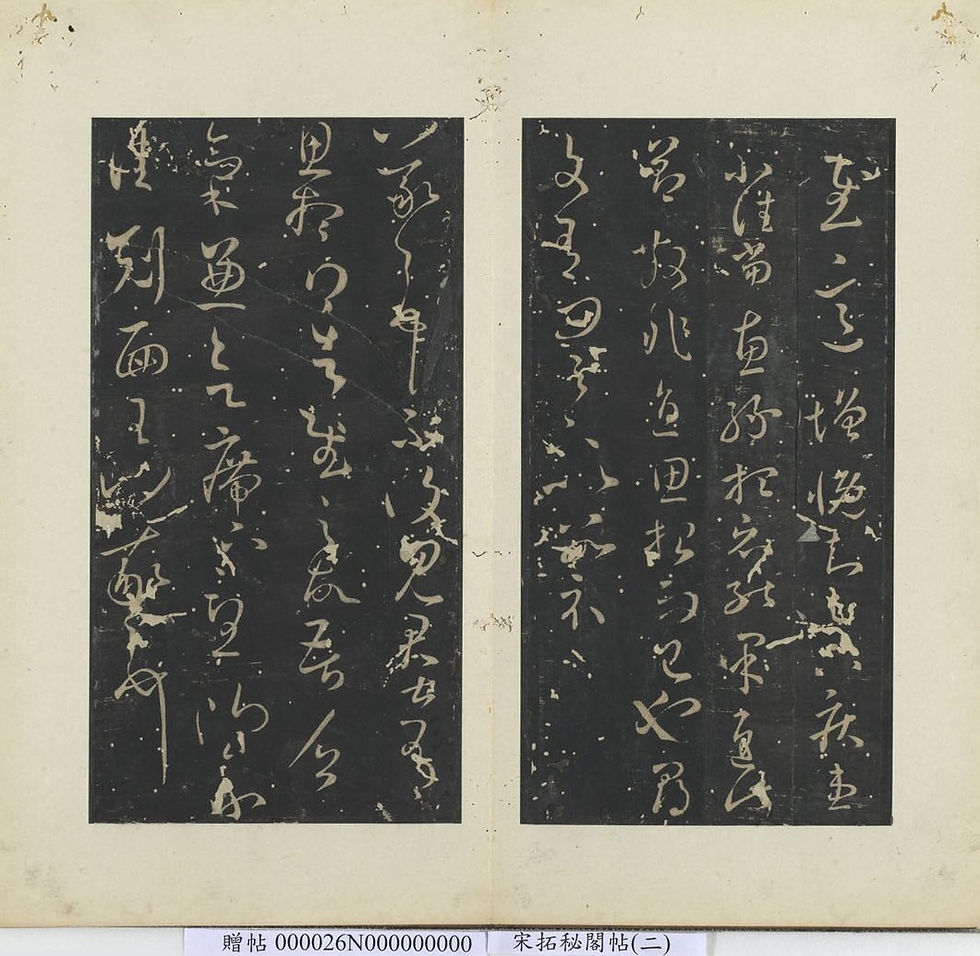
There are many typefaces for kanji. One of them, sosho (cursive style), formed by breaking down and simplifying kanji, arose in China, then developed in its own distinctive way in Japan and became the basis for hiragana. This calligraphic style, which evokes the movement of the brush, is known as “kuzushiji (broken-down characters).”
Of all the kanji script styles, this is considered a particularly decorative and beautiful one.
Hiragana
Hiragana emerged around the ninth century from the practice of rendering kanji in cursive style and simplifying them. During this period, kanji were used in official documents, while hiragana was used for writing diaries, letters, and composing waka poetry. Over time, it was also adopted by the general public.

Katakana
Next up is katakana.
Katakana was originally used by monks as symbols that indicated the pronunciation and reading order of kanji and Chinese texts.
Because of this, its characters are more symbolic in nature. Unlike those of hiragana, its shapes came from parts of kanji, and as such, they are composed of straight strokes, much as kanji are.
Katakana is still used today to write loanwords from other languages, as well as foreign personal names and place names.

3. An Explanation of Character Sets of Japanese Fonts
When providing a font, the character set is what impacts the budget.
Hiragana and katakana have 46 characters each, but the number of kanji characters in existence can go as high as 50,000 to 60,000. On top of that, symbols, punctuation, and Latin characters are also included in Japanese fonts. The specifications of which characters and how many of each are included are called the “character set.” There are multiple character sets used in font development, and Morisawa develops its fonts based on established standards. Among character sets are those defined by official standards, such as Japanese Industrial Standards (JIS), as well as those defined by specific organizations or companies, such as Adobe Inc. and Morisawa. The character types and character counts specified differ from one character set to another.
Adobe-Japan1
This series of character sets is defined by Adobe for use in Japanese font products. It is considered an industry standard, as many Japanese fonts used in Japan define their character sets in accordance with it.

Morisawa’s Proprietary Character Set: Mini 2 Set
This is a proprietary character set of Morisawa that is a compliant subset of Adobe-Japan1, but with fewer characters than the full Adobe-Japan1 set. It contains a total of 4,833 characters, made up of 3,930 kanji and 903 non-kanji characters.
In addition to including kanji officially used in Japan, such as JIS Level 1 Kanji, Joyo (daily use) Kanji, and Jinmeiyo (personal name) Kanji, frequently used characters are also included. This makes it a particularly well-suited character set for headline use, such as on product packaging. Taking advantage of the Mini 2 Set style, Morisawa can rapidly deliver typefaces that support a range of designs and new technologies, while covering widely used character collections.
We also offer custom fonts with character counts suited to your specific requirements.
So far, we’ve looked at the basics of Japanese characters. In the next article, we’ll introduce Japanese typesetting.


Comments